Your Key to the World: The Metropolitan Club’s Global Passport
At the Metropolitan Club of San Francisco, we believe your community should travel with you. While our historic clubhouse on Nob Hill is a beloved...
4 min read
By Vija Singh-Toubassi
This timeless phrase, echoed by great minds throughout history, captures a profound truth—every advancement is built upon the foundations laid by those who came before us. In 1915, a group of 17 visionary women embodied this principle when they founded the Metropolitan Club, originally called the "Women's Athletic Club of San Francisco."
Their mission was revolutionary for the time: to promote women's physical well-being and intellectual growth. Incorporated on October 25, 1915, the Club's founding documents described a bold vision to foster physical exercise, social culture, and maintain a clubhouse and gymnasium for its members.
Among the founders was Elizabeth Pillsbury, whose inspiration came from a visit to Chicago's Women's Athletic Club. Impressed by its grand facilities, she returned to San Francisco determined to create a similar transformative space for women. This was no small feat in an era when women's social spaces were typically limited to small parlor rooms, but men's clubs offered expansive, luxurious environments.
At a time when women did not have the right to vote, these founders dared to imagine a club that would rival men's establishments—a six-story building in the heart of San Francisco's financial district, dedicated to women's health, education, and advancement. Their vision was radical, facing skepticism from newspapers and even medical institutions that claimed women were "innately weaker in body and mind."
In such a dismissive and condescending environment, no one would have faulted our founders for abandoning their vision and retreating into the comfort of a more traditional life. But they didn’t. Instead, they pressed forward with grit, perseverance, and purpose. They took their time, moving thoughtfully and with great care. Over two years, they refined their mission, consulting with businesses, politicians, and even established men’s clubs like the Olympic, Bohemian, and Pacific Union Clubs.
Bold, curious, and collaborative, they refused to back down. They were determined to create a space where women could flourish physically, mentally, and socially. Their courage laid the foundation for everything we now enjoy.
Over the next 10 years, our founders made three crucial decisions: They hired the right people for the design, insisted on financial control of the building and its contents, and signed up pre-paid Members --- over 1,000 women!
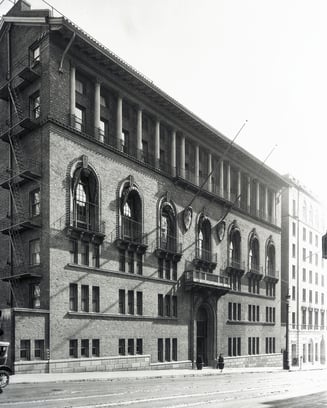
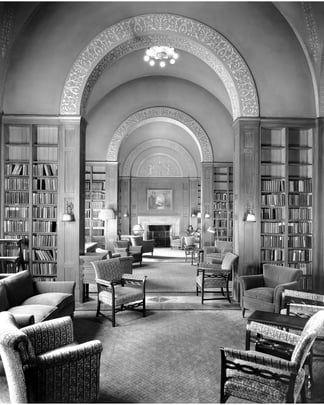
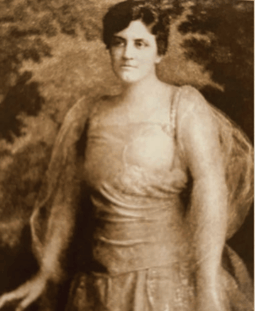
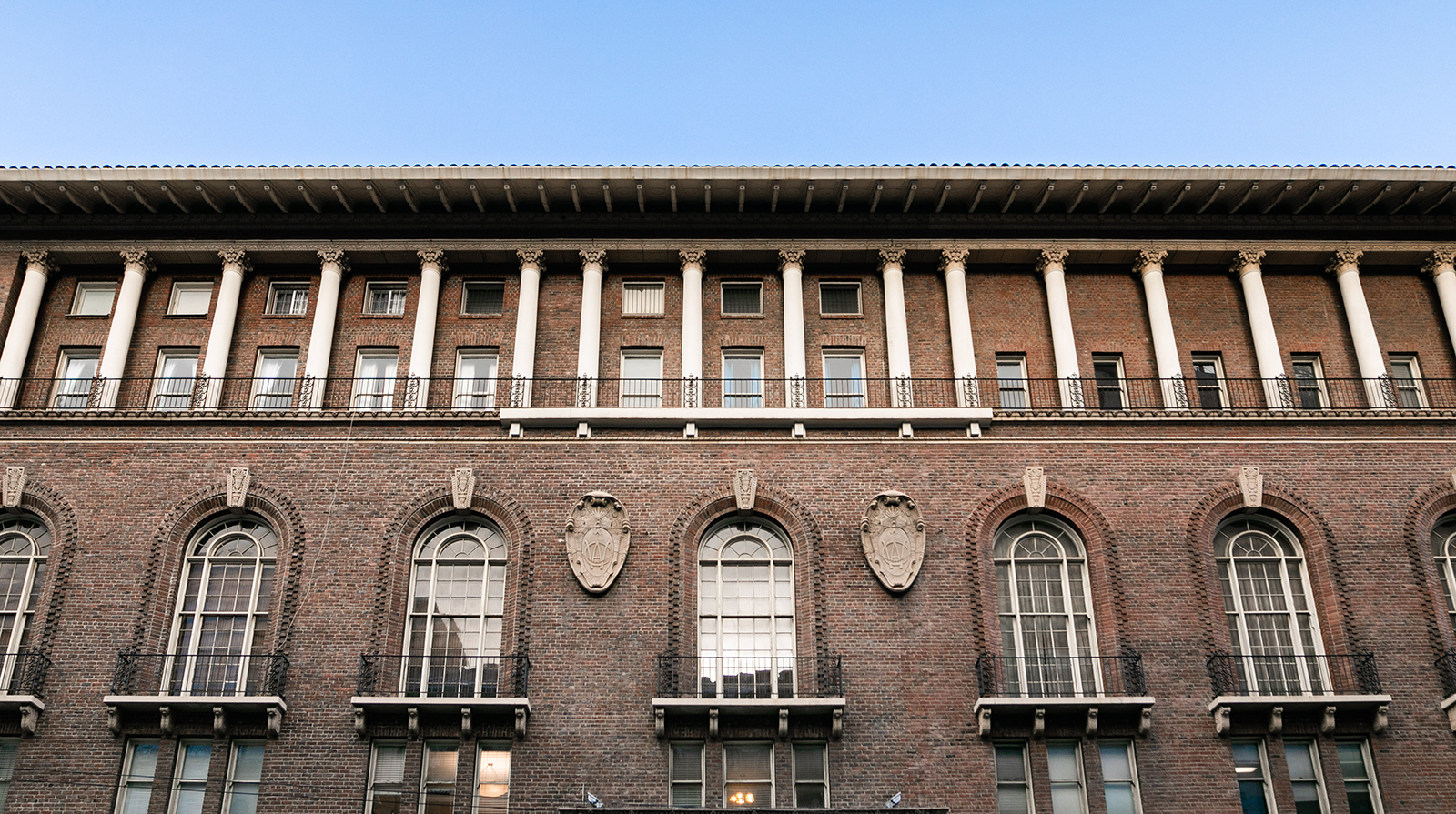
Our founders hired Faville & Bliss, a nationally renowned architectural firm with a proven reputation for creating landmark structures. Their previous work included the iconic St. Francis Hotel in Union Square, the Bank of California, and the prestigious University Club. Faville & Bliss were known for their signature style—a seamless blend of Italian Renaissance grandeur blended with Art Deco elegance. Signature details of this style included rich burnt red brick façade, accentuated by ornate stucco details and elegant iron balconies.
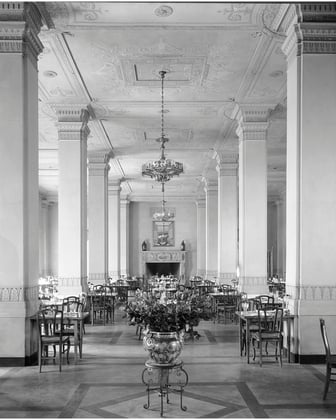
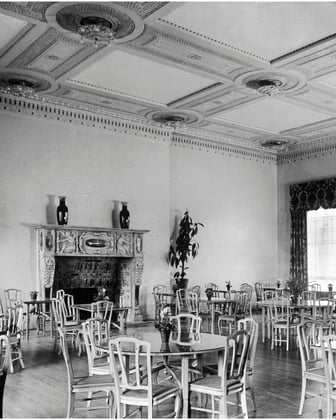
Inside, the building unfolds with layers of charm. The first floor welcomed guests with a grand lobby, staircase and elevator, setting a majestic tone. The second and third floors, designed as functional office spaces, are purposely understated. But on the fourth floor, the space transforms into a ceremonial haven, with luxurious dining rooms, grand fireplaces, and inviting seating areas, all brought to life under soaring double-height ceilings and framed by expansive arched windows. The fifth and sixth floors house our overnight rooms which at one time were used as permanent residences for some of our Members.
From the beginning, our founders made a daring and futuristic decision—they insisted on taking full financial control of the Club’s future. Unlike the Women’s Athletic Club of Chicago, which operated in a leased building, our founders chose ownership. Early on, they secured not only the land but also the building and all its contents. This move was more than just practical—it was a statement of independence and foresight. Their commitment to financial stability ensured the Club’s legacy, and we continue to benefit from their prudence today.
Just a few years after the Club’s original building was completed in 1917, our founders faced a problem—it was too small. Membership had grown to 1,500, and there was a waitlist. The Members were asking for more: more overnight rooms, more meeting space, an expanded dining room and bar, and larger fitness and pool facilities.
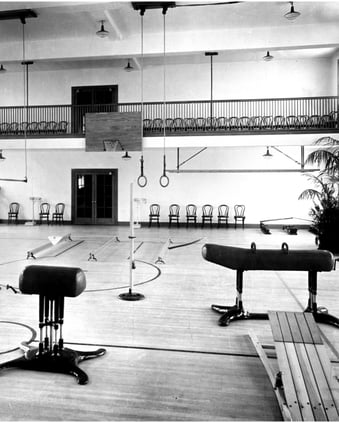
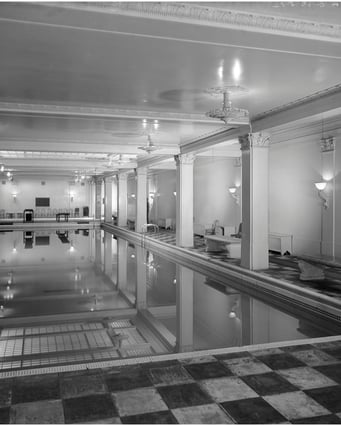
So, what did our founders do? They could have easily pushed back and said, “Come on! We just built this!” Instead, they listened. They took the feedback seriously and rose to the challenge.
In 1923, our founders finished an ambitious expansion that doubled the size of the clubhouse, transforming it to meet the growing needs of its Members. They added new dining rooms, created 18 luxurious overnight rooms, expanded the pool, and relocated the gym to the first floor—among many other thoughtful enhancements. This ambitious expansion not only elevated the club’s offerings but also reinforced their commitment to creating a space where women could thrive physically, socially, and intellectually.
In 1923 there was the expansion. A move that required purchasing the adjacent lot. True to their principles, the founders ensured full financial ownership and control of the land, building and contents. They also hired the original architects, Faville & Bliss, ensuring that the new addition would seamlessly blend with the original.
What’s remarkable about this expansion is how flawlessly it was executed. One would never guess that this building was once two separate structures. The integration is so seamless, it feels as though it was always meant to be one cohesive masterpiece—the very structure we know today. That is the hallmark of truly exceptional design. 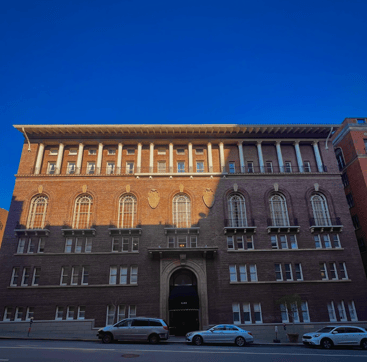
The foresight and boldness of doubling the club’s size within a few short years of its original construction is extraordinary. This wasn’t merely about physical growth; it was a response to a cultural shift. As industrialization reshaped society, the demand for women to be physically stronger grew, particularly as they entered new manufacturing roles. Athletic clubs for women were popping up across the country, and our expansion was perfectly timed to meet this changing landscape. It was not just an act of fearlessness, but a strategic move that positioned the club as a leader in empowering women during a pivotal era of social change.
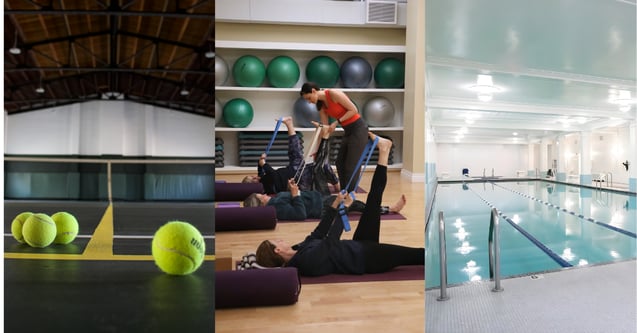
It’s tempting—and entirely understandable—to stick with a winning formula. But our Club has never settled for just maintaining the status quo. Over the years, we’ve embraced countless modernizations to enhance the Member experience. From adding private cabanas in the basement for Members to store personal items, to creating an indoor tennis and pickleball court, we continue to push boundaries. We also purchased an adjacent lot for exclusive Member parking, upgraded our kitchen facilities, installed a new roof, brought in state-of-the-art gym equipment, and remodeled our overnight rooms. These updates reflect our ongoing commitment to excellence and our desire to ensure the Club evolves with the needs of its Members, while staying true to its legacy.
NOTES
Making History
In the 1930s, the Club further demonstrated its progressive spirit by enlisting Julia Morgan—California's first licensed female architect—to enhance its interiors. Morgan, renowned for designing over 700 buildings including Hearst Castle, helped the club solidify its status as a trailblazer in women's empowerment and architectural innovation.
Also, the Club played a pivotal role during the 1945 San Francisco Conference, serving as the social hub for representatives from 50 nations drafting the United Nations Charter.
National Historic Register
In 2004, the Metropolitan Club of San Francisco was honored on the National Register of Historic Places for its remarkable significance. Architecturally, the building masterfully blends Italian Renaissance and Art Deco styles, creating a distinctive space. Pioneering women's fitness, it was one of the first clubs exclusively dedicated to women's physical well-being during an era of limited opportunities.
At the Metropolitan Club of San Francisco, we believe your community should travel with you. While our historic clubhouse on Nob Hill is a beloved...